Gun Distance: 6–8 Inches, No Exceptions
The optimal gun-to-panel distance for clear coat application is 6–8 inches. This isn't a suggestion — it's physics. At 6 inches, the atomized clear coat droplets have optimal velocity, solvent load, and spread pattern when they hit the panel. Move closer than 5 inches and you get excessive wetness, solvent entrapment, and a high risk of runs. Move beyond 10 inches and the droplets partially dry in flight, creating dry spray, excessive orange peel, and poor intercoat adhesion.
Maintain consistent distance throughout the pass. The most common mistake is arcing the gun — starting close at the edge, pulling away in the middle, then dipping back in at the far edge. This creates uneven film build: thick edges (runs) and thin center (dry, peely). Keep your wrist locked and move your entire arm from the shoulder. Practice dry passes on masking paper to develop muscle memory.
Tape a 6-inch spacer (a wooden paint stir stick works) perpendicular to the gun body during practice. If you can't maintain distance without the spacer touching the panel, practice dry passes until it feels natural. Pull the spacer off for real spraying — it's a training aid, not a permanent fixture.
Travel Speed: One Foot Per Second
Gun travel speed directly controls film thickness. At a given fluid setting, slower speed deposits more material; faster speed deposits less. The sweet spot for most HVLP guns spraying 2K clear coat is approximately 1 foot per second — roughly the pace of a slow, deliberate walk. Faster than 1.5 ft/s gives thin, dry coats with poor gloss. Slower than 0.5 ft/s floods the panel and guarantees runs.
The trigger discipline rule: Start moving the gun before pulling the trigger, and release the trigger before stopping movement. Never trigger on/off while stationary. This eliminates the heavy spots at the start and end of each pass that cause zebra striping — alternating bands of thick and thin clear coat visible under fluorescent light.
Overlap: The 50% Rule
Each pass of clear coat must overlap the previous pass by 50% — meaning the center of your current spray pattern tracks the edge of the previous pattern. This gives a uniform double-pass film thickness. Overlap less than 50% (say 25% or "just touching") and you get thin stripes between passes where only one coat landed. These stripes cure with different film thickness, creating visible bands.
For a typical HVLP fan width of 8–10 inches at the panel, 50% overlap means your next pass shifts 4–5 inches from the previous centerline. On horizontal panels (hoods, roofs, trunk lids), work front-to-back. On vertical panels, start at the top and work down — this lets any light overspray or bounce drift onto unpainted areas, not onto fresh clear.
On large horizontal panels like hoods and roofs, spray a "border pass" first — a single pass around the entire perimeter. Then fill in the center with regular 50% overlap passes. The border pass blends the edges and prevents thin coverage at the perimeter, which is the most visible area when the hood is closed.
Flash Time: Patience Pays
Flash time is the waiting period between coats that allows solvents to evaporate before the next wet coat is applied. For 2K urethane clears at 70°F, standard flash time is 10–15 minutes between coats. Rushing this is the #1 cause of solvent pop and dieback (loss of gloss after curing).
How to test flash readiness: Lightly touch the masking tape at the edge of the panel with a gloved fingertip. If the clear strings — forming thin threads when you pull away — it's still too wet. If it's tacky but doesn't transfer to your glove, the next coat can go on. If it's completely dry to touch, you've waited too long and need to scuff before the next coat (follow your TDS for recoat windows).
Temperature Control: The Invisible Variable
Temperature affects everything in clear coat application: viscosity, solvent evaporation rate, chemical reaction speed (for 2K products), and flow-out time. The ideal spraying temperature range is 68–77°F (20–25°C). Panel temperature matters more than air temperature — a car that sat in the sun all day can be 120°F even if the booth is 70°F.
Cold panels (below 60°F): clear coat thickens, atomization suffers, and orange peel worsens. The clear may "hang" without flowing out. Use a slower reducer and allow extra flash time. Warm panels (above 90°F): solvents flash too quickly, the clear skins over before leveling, and solvent pop risk skyrockets. Use a faster reducer and reduce fluid flow slightly.
In an inflatable paint booth, temperature control is straightforward: position the booth out of direct sunlight, use the blower to maintain airflow, and if needed, place a portable heater upstream of the intake (never inside the booth — fire hazard). The positive pressure design of Sewinfla booths helps maintain consistent temperature by continuously exchanging air.
Check panel temperature with an infrared thermometer — not by feel. A $20 IR gun tells you exactly what the metal temperature is. Shoot for 68–77°F panel temp. If the panel is 15°F warmer than the booth air, wait. Hot metal + cold clear = instant solvent flash and orange peel city.
The 3-Coat Clear System
Professional painters don't spray a single heavy clear coat. The standard approach is three coats:
Coat 1 — Tack Coat: Medium-light application, 50% overlap. This gives the subsequent coats a slightly tacky surface to "bite" into and seals the basecoat. Flash 5–7 minutes. The tack coat should look semi-gloss, not full wet.
Coat 2 — Medium Wet: Full wet application, consistent speed and distance. This is your main build coat. It should look glossy and smooth immediately after spraying. Flash 10–15 minutes until tacky but not stringy.
Coat 3 — Flow Coat: Slightly heavier than coat 2, applied with a slightly slower pass speed. This is the final appearance coat — it has the most reducer by proportion in the film and flows out the smoothest. After this coat, close the booth and let it cure undisturbed. Any booth entry during the first 15 minutes of cure will introduce dust into the wet clear.
Key Takeaways
- Maintain 6–8 inch gun distance with a locked wrist — no arcing
- Travel speed at ~1 ft/sec; trigger on while moving, trigger off while moving
- 50% pattern overlap on every pass for uniform film thickness
- Flash 10–15 minutes between coats at 70°F; test by touch on tape edge
- Spray at 68–77°F panel temperature — use an IR thermometer to verify
- Use the 3-coat system: tack coat → medium wet → flow coat for glass-smooth results
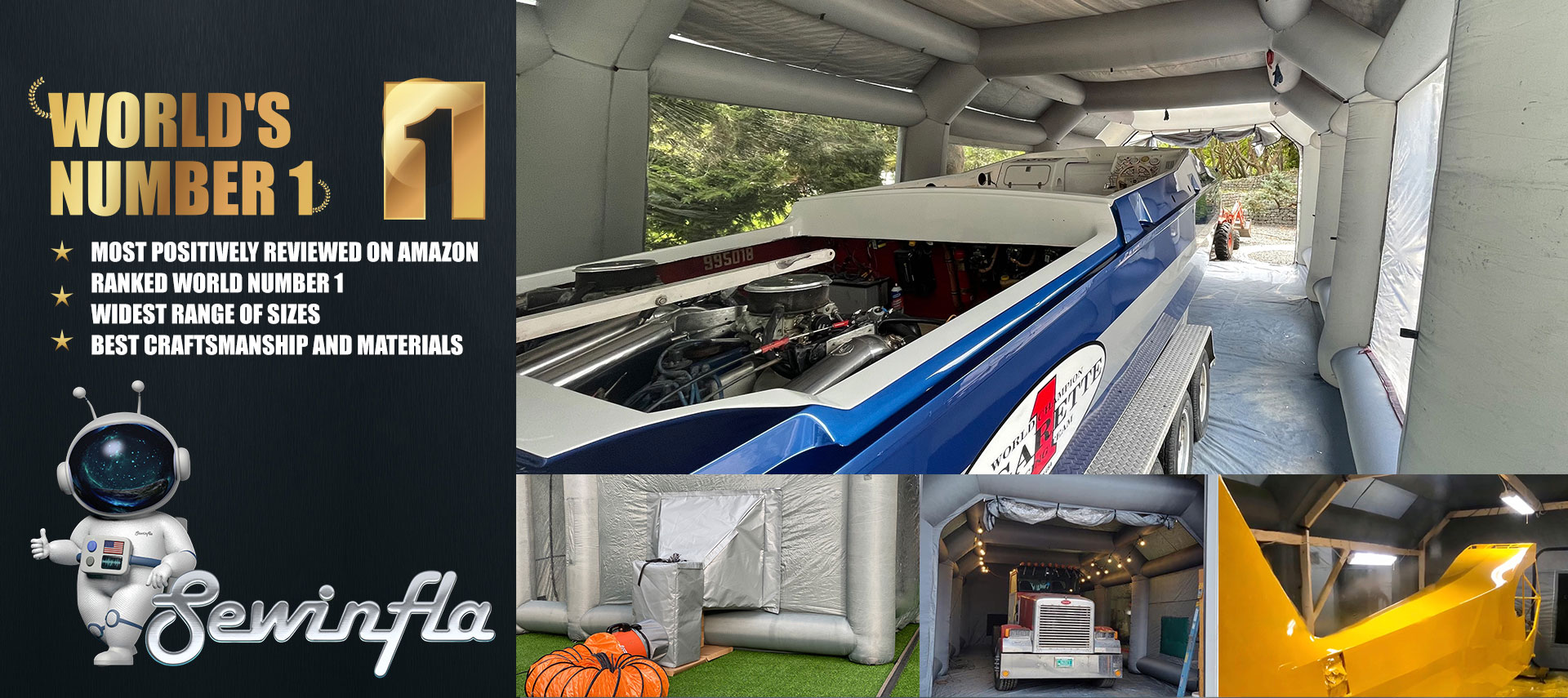
Control Your Environment
A Sewinfla inflatable booth gives you temperature-controlled, dust-free conditions — the controlled environment your clear coat needs to flow out like glass.
Learn More